

Cao Bang tourism is increasingly receiving more and more attention from foreign tourists and many young people in the country. So what does Cao Bang have? Let’s explore 10 interesting Cao Bang tourist destinations with Smile Travel!
See More
- Top 30 most beautiful tourist destinations in Vietnam 2025
- Top 15 Must-Visit Tourist Attractions in Hanoi
- Top 8 Must-Visit Tourist Attractions in Halong bay
- Top 15 Must-Visit Tourist Attractions in sapa
- Top 10+ Must-Visit Tourist Attractions in Danang
- 10 most famous tourist destinations in Ninh Binh today
Introduction to Cao Bang tourism
Cao Bang is a mountainous province located in the Northeast of Vietnam and bordering China. Due to being dissected by a dense river system, Cao Bang’s terrain has many mountains and valleys.
The climate here is quite cool and has two distinct seasons: rainy season and dry season. The rainy season usually lasts from April to September, and the dry season will start from October to March of the following year. This is also a point that you need to pay attention to when choosing the right time to travel to Cao Bang.
Top 10 must-see tourist destinations in Cao Bang
So where should you go when traveling to Cao Bang? Let’s take a look at the places you can’t miss when coming to this land!
1. Ban Gioc Waterfall
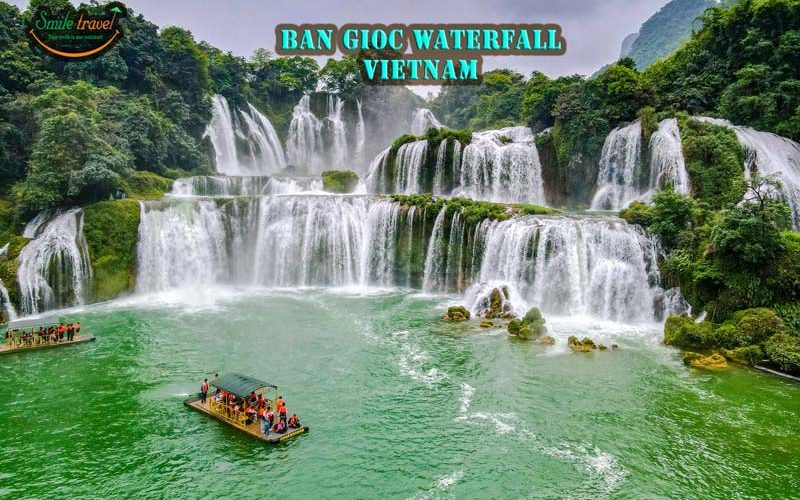
Perhaps this is a destination that is no longer strange to many young people, right? And when mentioning Cao Bang, the first destination that must be mentioned is this waterfall. Located in the top 4 largest transnational waterfalls in the world, this place is increasingly attracting many tourists to Cao Bang to admire.
The waterfalls intertwine into layers of white flowing down, creating a majestic scene of Cao Bang’s mountains and rivers.
Unmissable Experiences
**Bamboo raft ride to the base of the falls:** Purchase a ticket for a covered bamboo raft and let the boatman guide you to the middle of the Quay Son River. You can get right up close to the cascading main waterfall and feel the exhilarating, cool mist against your face.
**Photo ops during the Trung Khanh rice harvest:** September and October mark the most beautiful time of year at Ban Gioc. The river water is crystal clear and abundant, while the terraced rice fields at the foot of the falls turn a brilliant golden hue, creating a breathtaking natural landscape.
**Photography at Phat Tich Truc Lam Ban Gioc Pagoda:** Situated on Phia Nham Mountain, about 500 meters from the waterfall, this is the first pagoda built on this border region. It offers the ideal vantage point to take in a magnificent panoramic view of Ban Gioc Waterfall from above.
**Explore Nguom Ngao Cave:** A spectacular limestone cave located just 3 km from the waterfall. Stretching over 2,000 meters, the cave features a system of brilliant golden stalactites that form magical shapes resembling inverted lotus blossoms or coral reefs.
2. Phat Tich Truc Lam Pagoda
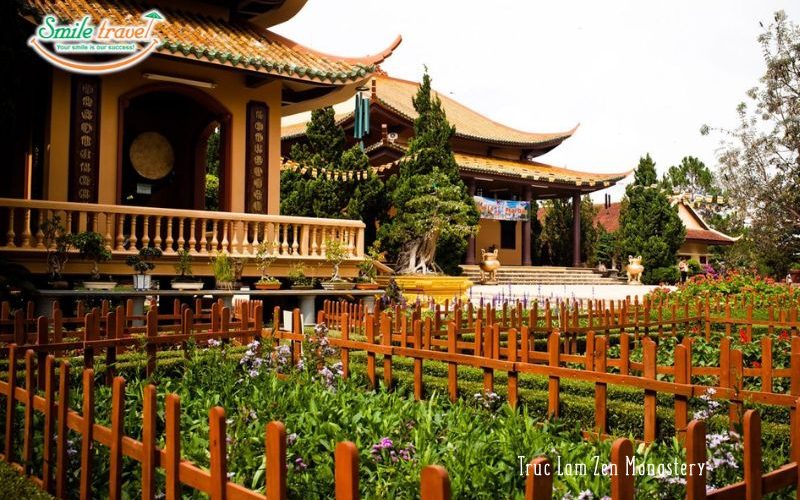
This is the first pagoda built in the northern border of the country. Phat Tich Truc Lam Ban Gioc Pagoda was built majestically and spaciously on Phia Nham mountain, in Ban Gioc, Dam Thuy commune, about 500m from Ban Gioc waterfall. From the pagoda, you can see the entire Ban Gioc waterfall and a large space below.
Phat Tich Truc Lam Ban Gioc Pagoda leans against the mountain, in front is a large space, with fields, mountains and endless green trees, creating a peaceful picture of the Vietnamese countryside. Refer to Smile Travel’s 3-day, 2-night Cao Bang tour to explore Cao Bang right away!
A Sturdy, Authentic Vietnamese Architectural Landmark on the Border
Inaugurated on December 15, 2014, the entire pagoda complex—spanning approximately 3 hectares—was constructed in the style of traditional Vietnamese temple architecture:
Traditional materials: The pagoda features a structure made entirely of ironwood (*lim*), brick walls, and a system of curved, upswept roofs tiled with traditional “parrot-beak” tiles (*mũi hài*). All horizontal lacquered boards and parallel sentences within the complex are inscribed in Vietnamese script.
Key worship structures: These include the Three-Entrance Gate (Tam Quan), the Bell Tower, the Drum Tower, the Main Hall (dedicated to the Buddha), the Ancestral Shrine, and the Mother Goddess Shrine (Đền Mẫu). In addition to Buddhist altars, the Mother Goddess Shrine serves as a sacred space honoring national heroes and figures of great merit, such as the Hung Kings (the nation’s legendary founders), Saint Tran (Tran Hung Dao), President Ho Chi Minh, General Vo Nguyen Giap, and Tri Cao—a national hero of the Tay and Nung ethnic groups.
The Thien Bao Great Bell: A highlight of the Bell Tower is a massive bronze bell weighing 1.5 tons. When the bell tolls amidst the mountains and forests of the Northeast, it evokes a sense of peace and carries its resonance far across the border.
3. Pac Bo – Lenin Stream Relic Site
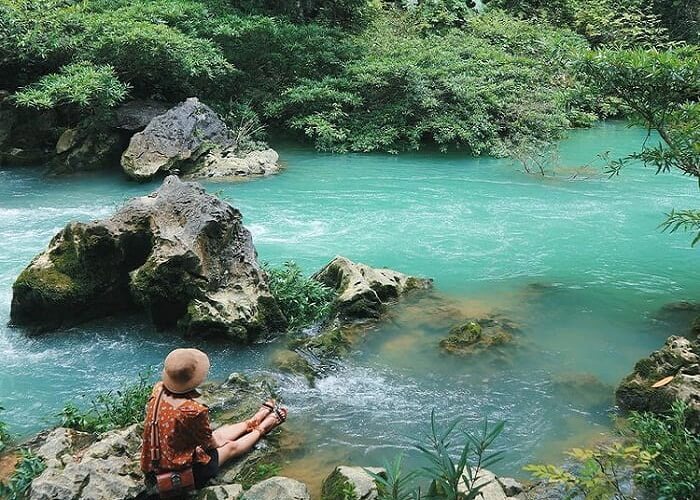
This is the place that Uncle Ho chose as the revolutionary leadership base and is the place that left an important mark in the nation’s resistance war against France and the US. Through the ups and downs of history, today this place still preserves almost intact the evidence and marks of the revolution and of the great President Ho Chi Minh.
Along with the cool, gentle stream of Lenin stream, when you come here, you will feel a strangely peaceful and pleasant feeling. Pocket this place in your Cao Bang travel trip.
4. Nguom Ngao Cave
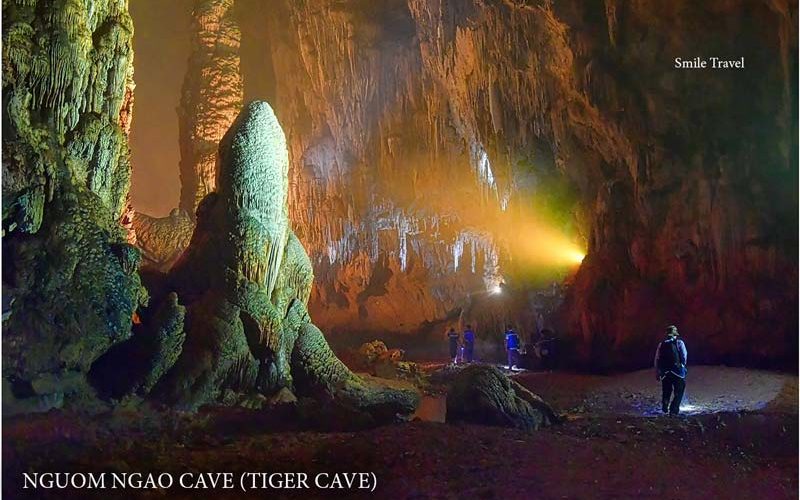
Besides Ban Gioc Waterfall, Nguom Ngao Cave can also be considered a masterpiece of nature given to Cao Bang. Inside the cave is like a maze with large and small stalactites. The uniqueness in the shape of the stalactites is something that any tourist traveling to Cao Bang must admire and praise.
A dazzling and magical world of golden stalactites
Nguom Ngao Cave has a surveyed length of approximately 2,144 meters and features three main entrances: Nguom Nom, Nguom Ngao, and Ban Thuon. Venturing deep into the cave along a concrete walkway illuminated by artistic LED lighting, visitors pass through vast caverns housing priceless geological masterpieces:
The Inverted Stone Lotus (Golden Lotus): This is the most iconic symbol of Nguom Ngao Cave. Sculpted by nature over millions of years, this massive stalactite formation resembles an upside-down lotus flower, with stone petals defined by exquisite, intricate detail.
The Silver Tree, Dodder Vine, and Coral Tree: Towering stone columns cascade from the ceiling, their mineral crystals (iron and copper) catching the light to create brilliant hues of golden yellow and reddish-brown.
A World of Petrified Creatures: Countless stalagmites rise from the cave floor, forming shapes that resemble water-glistening terraced fields, golden waterfalls, elephants, and even a mythical fairy bed.
Ideal Temperature: The air inside the cave remains between 18°C and 25°C year-round, offering a refreshingly cool atmosphere in summer and a cozy warmth in winter.
5. Thang Hen Lake
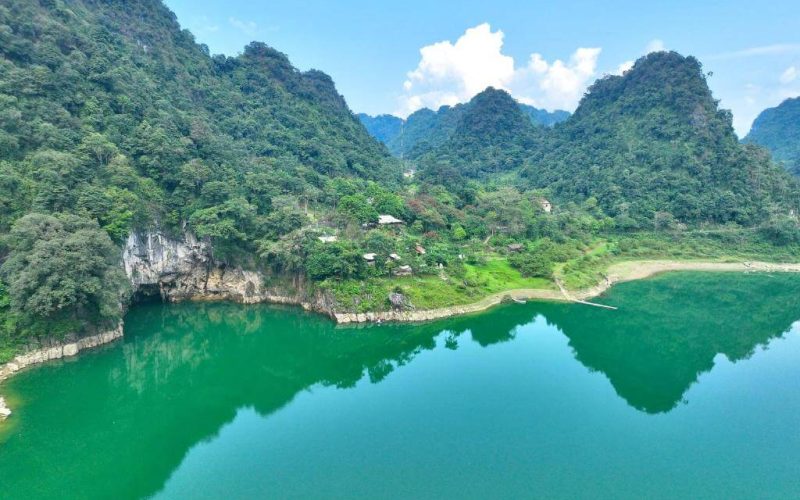
Located about 50m from Cao Bang city, this is one of the most beautiful places that most backpackers love.
The lake is covered with a jade green color all year round, surrounded by limestone mountains. Coming here, you will feel like you are lost in a fairyland. Coming here, you can also choose to sit on a boat drifting on the lake to admire the scenery around the lake. This is truly an extremely ideal check-in location in Cao Bang for those who love taking pictures.
A unique system of 36 interconnected lakes
The “Bee’s Tail” name: In the local Tay language, “Thang Hen” translates to “bee’s tail.” Viewed from above, the lake’s winding, undulating shape resembles the curved tail of a giant bee.
A mysterious hydrological network: Thang Hen is not actually a single, isolated lake but a system of 36 natural freshwater lakes. Although separated on the surface by sheer limestone cliffs, they are fully interconnected deep underground via caves and subterranean rivers.
The mysterious water-draining phenomenon: Around September or October, Thang Hen Lake often exhibits a fascinating karst geological phenomenon: the lake’s massive volume of water can drain away completely within just a few hours through underground sinkholes—leaving behind exposed mud—before the groundwater naturally wells up again.
6. God’s Eye Mountain
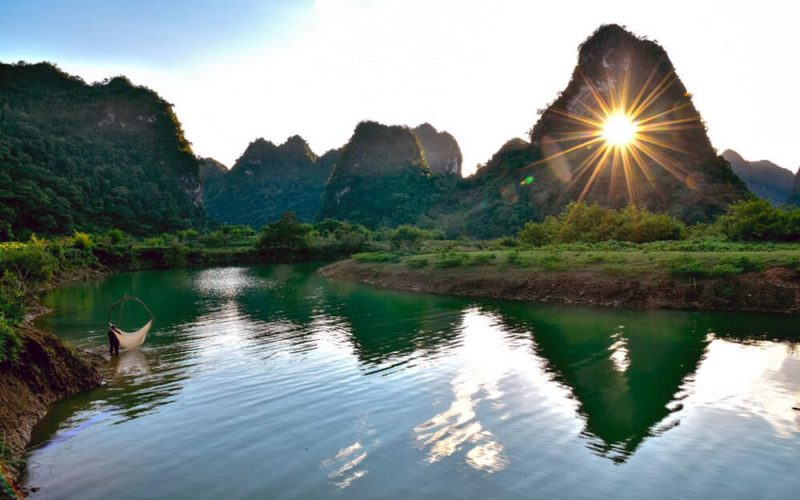
If you are a nature lover and want to immerse yourself in a cool green space, then Mat Than Mountain will probably make you extremely excited.
Mat Than Mountain is nestled in the valley between Thang Hen Lake complex of Cao Bang Non Nuoc Geopark , where the scenery is extremely charming with vast grasslands next to vast blue lakes stretching across the sky. It would be great to come here with friends and camp together, chat, and admire the beauty of nature.
Unforgettable Photography Experiences
Catching the sunrise at “God’s Eye” (Mắt Thần): The most magical time here is between 5:30 and 6:30 AM. The day’s first rays pierce through the mountain’s natural opening, casting a brilliant, shimmering beam of light—resembling a divine beacon—down onto the misty valley.
Trekking up to “God’s Eye”: If you are physically fit, you can follow the steep, rocky trail behind the mountain to climb directly to the opening itself. Inside this massive aperture, the structure resembles a dry cave, featuring ancient stalactites hanging from above.
Visiting Nam Tra Waterfall: Located right next to God’s Eye Mountain, this is a pristine, multi-tiered waterfall; its waters murmur softly as they weave through limestone formations in the heart of the poetic valley.
7. Me Pia Pass
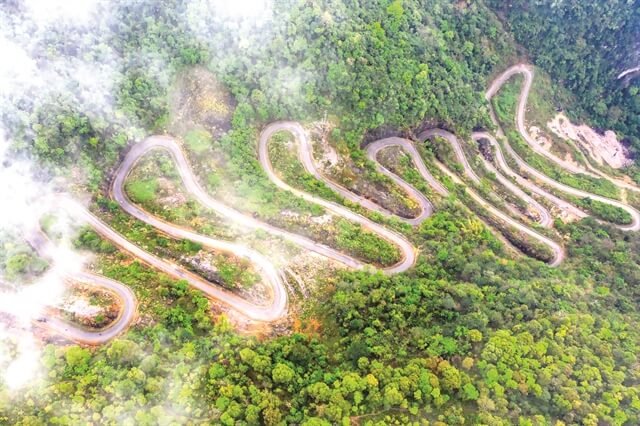
Located on National Highway 4A, the section connecting Xuan Truong commune to the center of Bao Lac border district, Cao Bang province . This is a 14-level pass with many consecutive sharp turns.
To be able to fully admire the entire Me Pia Pass, you have to trek along the forest path to reach the top. Therefore, for tourists who want to challenge and conquer themselves, this is also a quite attractive Cao Bang tourist destination .
8. Cao Bang ancient stone village
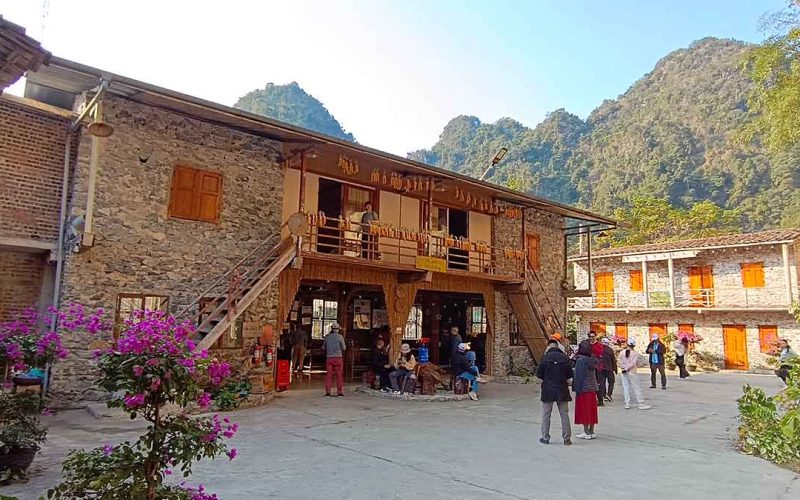
As a fan of checking in and taking virtual photos, you definitely should not miss this Cao Bang tourist destination . As an ancient village with unique architecture, the village attracts many curious tourists to visit and explore.
If you have known about stilt houses – houses made of wood, then in the stone village, the houses are made entirely of stone, extremely unique and new. Not only that, when you come here, you can hear mysterious stories about the village.
The unique architecture of ‘stone fortresses’
Spanning approximately 10,000 m², the village grounds feature over 14 traditional stilt houses that back against limestone mountains and face the crystal-clear waters of the Khuoi Ky stream.
Stone stilt house structure: The walls are constructed from natural river stones and quarried rock—50–60 cm thick—bound together with a mixture of lime and sand. Foundations and supporting pillars are also crafted from carefully selected, massive, and sturdy stone blocks.
Yin-yang tile roofs: Topping these solid stone-and-wood structures are moss-covered yin-yang tile roofs, embodying the distinctive ancient architectural style of the highlands.
Stone pathways: Venturing deeper into the village, one finds that everything—from boundary walls and gateways to the winding alleyways—is paved with stones polished smooth by the passage of time.
9. Nam Tra Waterfall
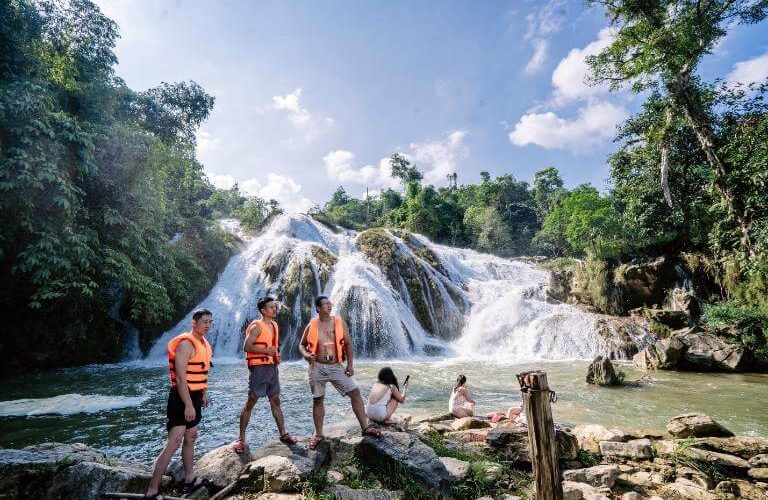
Located in the valley of Ban Danh hamlet, Quoc Toan commune, Tra Linh district, Cao Bang with majestic and wild natural beauty, attracting many tourists to visit and explore. At any time you come to Cao Bang , this place always retains its inherent natural beauty, making it possible for tourists to comfortably come here all year round, enjoying an interesting vacation with family and relatives.
A multi-tiered beauty weaving through Karst rock formations
In contrast to the grandeur and roar of Ban Gioc Waterfall, Nam Tra Waterfall exudes a more peaceful and gentle charm:
Multi-tiered structure: While not exceptionally tall, the waterfall descends across several gently sloping tiers. The cascading water weaves through undulating grey limestone outcrops—blanketed in ancient green moss—creating winding flows that resemble ribbons of silk.
Adorned with wildflowers: Lush greenery and vibrant wildflowers—which shift in color with the seasons—surround the falls, creating a lively and wild landscape at the water’s base.
A tranquil pool at the base: Water cascading down the tiers collects in a calm, crystal-clear turquoise pool, offering an ideal spot for visitors to wade in the stream or go for a ride in a traditional bamboo boat.
10. Cao Bang market
The beauty of the highland people is not only expressed through their costumes and dishes, but also through the Market sessions. Immersing yourself in the hustle and bustle of the market, you will discover the differences of the people here. This is also an extremely interesting Cao Bang tourist destination that you should experience when traveling here.
See More
- Travel agency near me: 10 reputable quality nationwide companies
- 10 Best Tour Operators and Travel Agencies in Vietnam
- 10 reputable and quality travel and tourism agents in Hanoi, Vietnam
- Top 10 Most Beautiful and Best Cruises in Ha Long Bay 2025
- Review of Smiletravel Hanoi Vietnam travel company
Thus, Cao Bang is a land with many majestic and beautiful natural landscapes. If you are planning to travel to Cao Bang , Smile Travel always has a Cao Bang tour package, helping you have a specific schedule and save costs. Contact hotline +84 346190168 for consulting support.
Contact:
- SDT Hotline/ Whatsapp/Line/Viber: +84 346190168
- Email: smiletravelindochina@gmail.com
- Fanpage: https://www.facebook.com/smiletravelindochina
- Websites: smiletrave.net / smiletravelindochina.com / vietnamhalongbay.com